Passover in the Berkshires

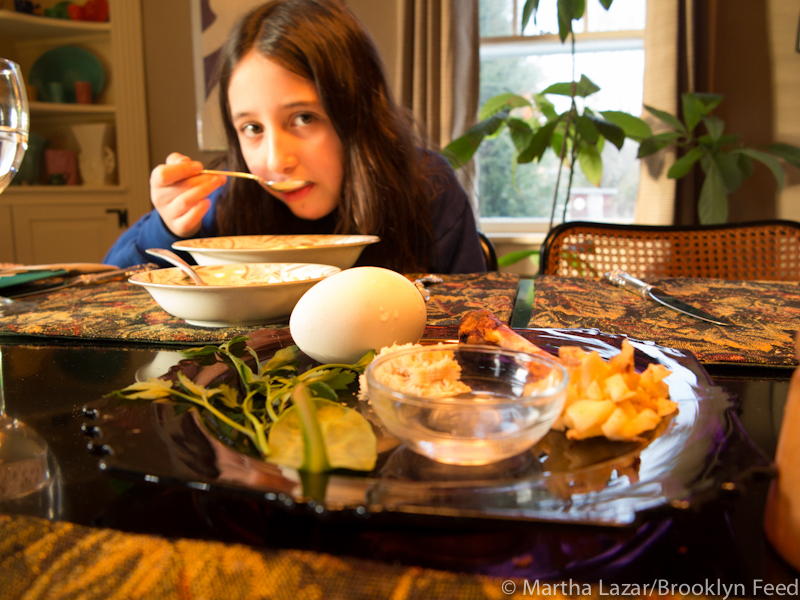
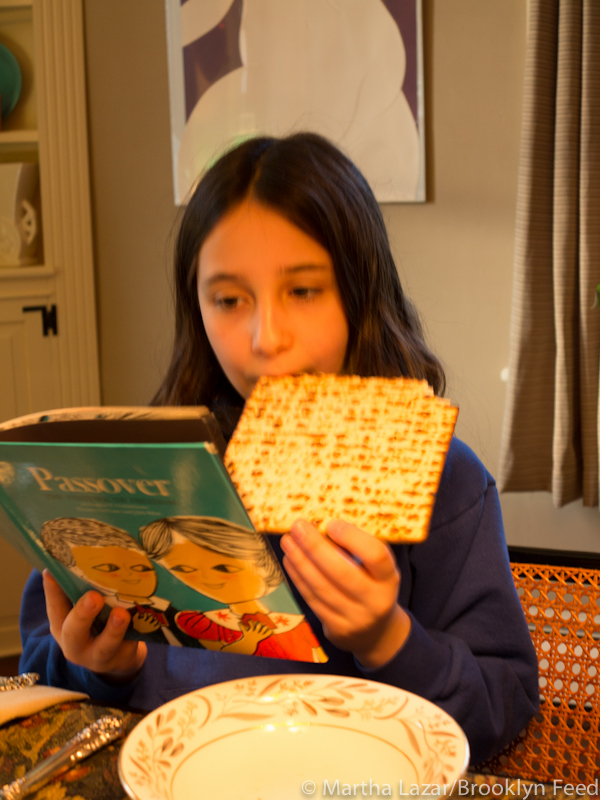
Last week while Lindsay was on break, we went up to the Berkshires for a few days. We had a nice low-key seder complete with matzo-ball soup, brisket and macaroons. passover-3

passover-4

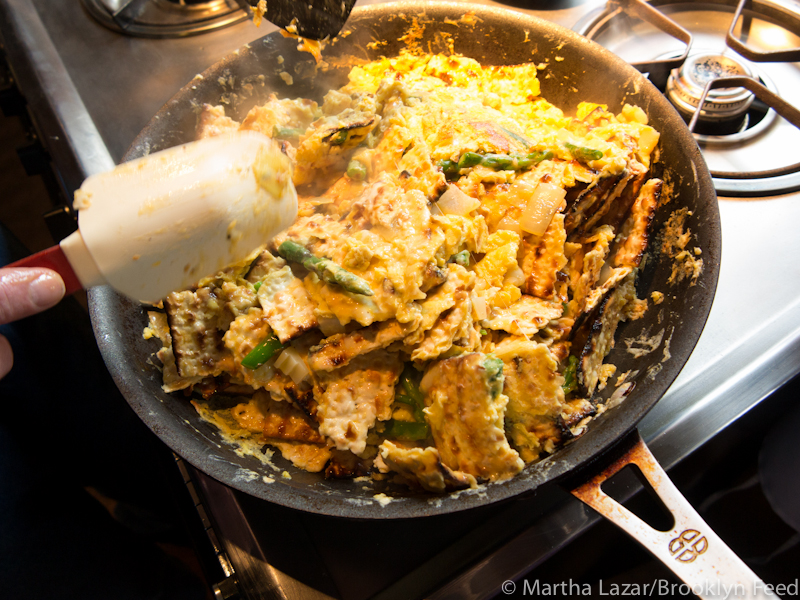
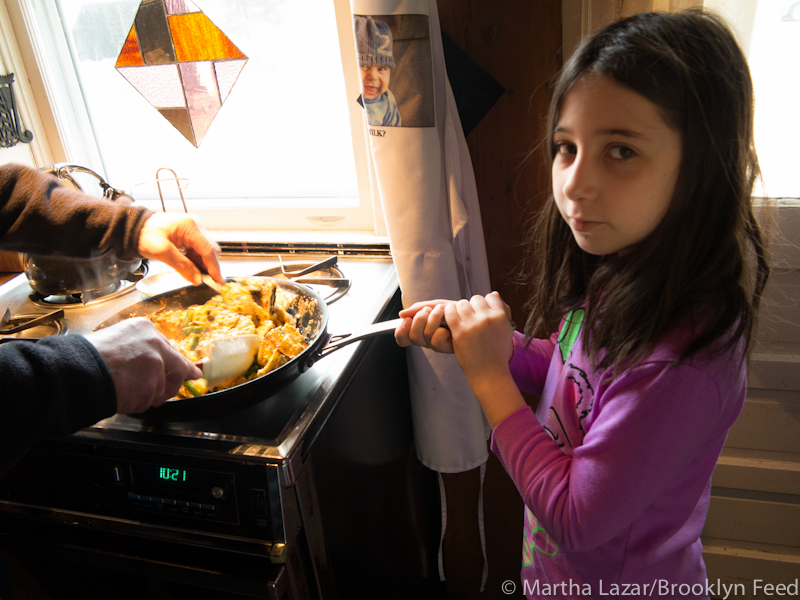
The next morning my father-in-law and daughter made matzo brei. Matzo brei is basically a form of scrambled eggs. You take matzo crackers, run them under warm tap water for a few seconds. Then you crumble them and add to beaten eggs. The ratio is approximately 1 cracker for every 1 1/2 large eggs. We sauté onions and asparagus first and then cook the eggs. I think last year we used mushrooms instead of asparagus.

passoverpassover-2

Eating the sauerkraut

I made a huge batch of sauerkraut last month. Most of it went to local friends and chicken sitters. We have a couple of jars in the fridge to slow down the fermenting process.

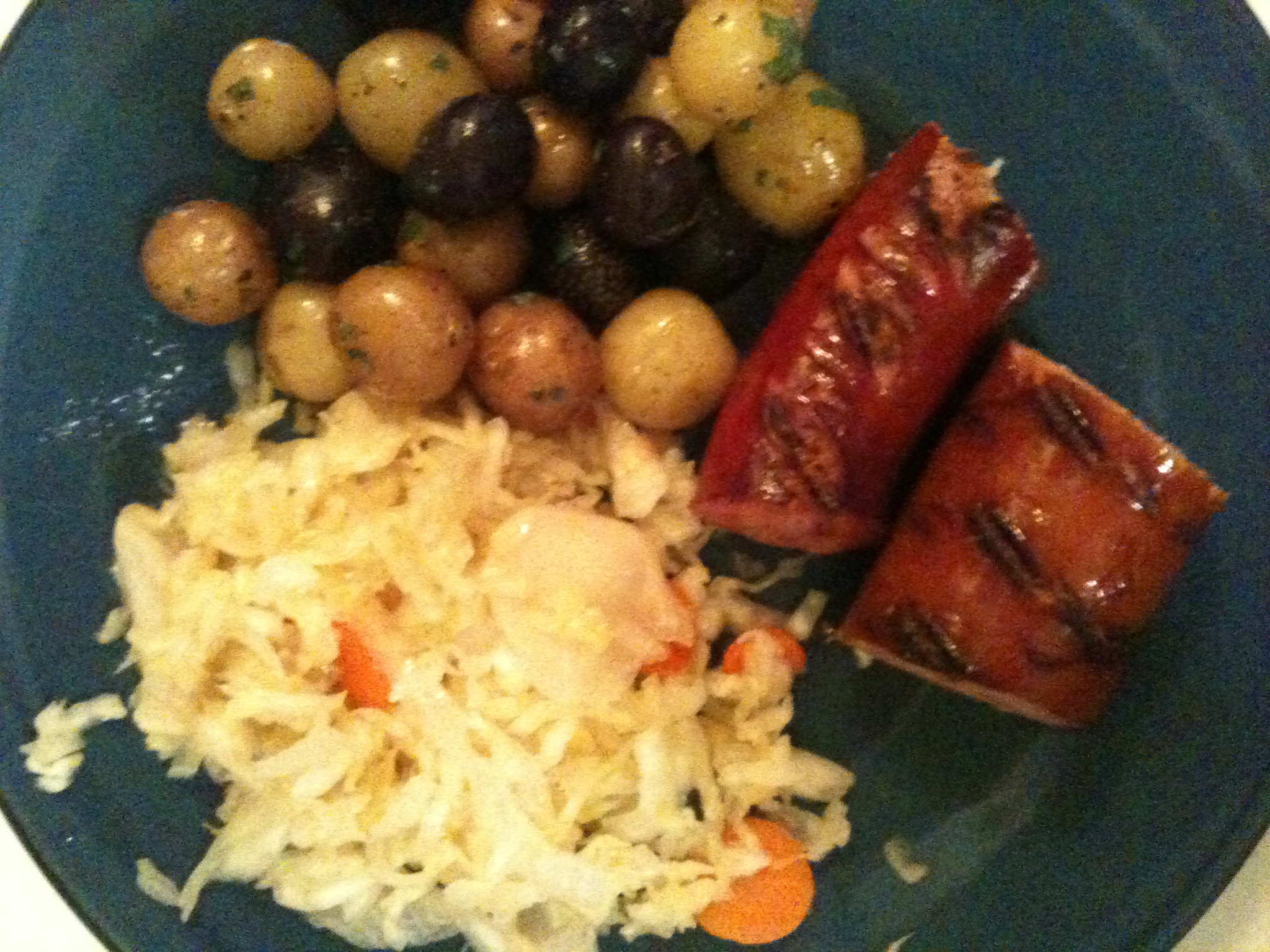
Neil and I were talking about getting a kielbasa to eat with it, when we happened to pass by a Russian deli/butcher. We bought 2 different types of kielbasa (regular and 1/2 smoked). That was one of those “I love NY” moments. It made the meal perfect.

Potatoes and Pine

We are a family who celebrates many different holidays. So it comes as no surprise that during Hanukkah, we do Christmasy things as well.

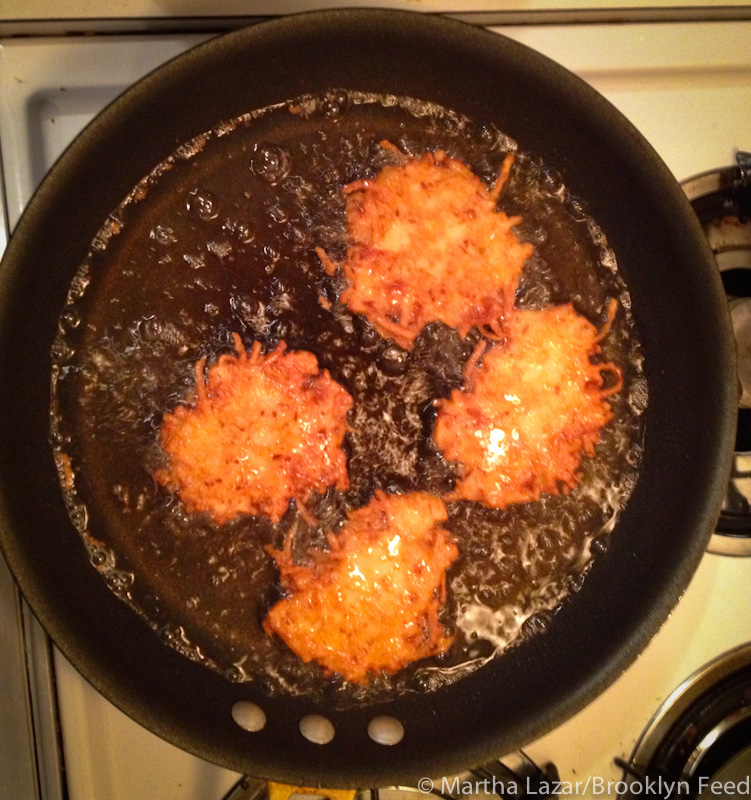
On the first night of Hanukkah, we made potato latkes. My recipe is based more on feel than measurements, but this is basically it.

  • 4 idaho potatoes, peeled and chopped to fit in the food processor
  • 1 small onion
  • 3 eggs, beaten
  • 1/4-1/2 cup of flour
  • corn oil for frying

I purée half the potatoes, adding the onion at the end, so it gets finely chopped. I grate half the potatoes. This gives me a nice mixture of soft insides and crunchy outsides. The onion adds a little sweetness. After I’ve processed the potatoes, I squeeze excess moisture out of them and then mix in the eggs and flour. You can add salt and pepper to taste.

I heat the oil until it’s ready to sizzle and then drop a serving size spoon’s worth of the potatoes into the pan. I turn them when they are golden brown.

I also have a pan in a 200 degree oven that has paper towels on it. When the latkes are done cooking, they go in the oven to drain and keep warm until we’re ready to eat them.

We had skirt steak and salad with the latkes. And the next day we had eggs over easy on top of the leftover latkes! Yum.

Lindsay has been very interested in making cake pops, so we gave her a cake pop maker for Hanukkah.

And of course, we visited the tree at Rockefeller Center!

Making Sauerkraut

In this post, I showed how to make sauerkraut. I used a plain old ball jar to let the veggies ferment. I found this technique to be problematic, because it was difficult to weigh down the veggies.

When fermenting veggies, you really need to keep them below the surface of the brine. If they aren’t below, mold grows on them. Now, this isn’t uncommon, and many people routinely scoop the “scum” off the top. That just made me squeamish. It’s really funny, because if you ask most of my friends, I have a very high “skeeve” threshold.

I wanted to get a crock that was made specifically for fermenting and pickling. In comes the Harsch Crock. This guy is expensive, but it’s the kind of thing you buy once. It comes with weights that sit on top of the veggies to keep them submerged in the brine. It also has a channel in the lid that you fill with water, which allows gases to escape the crock, but doesn’t allow air or debris in.

I looked online at all the tiny photos like this one and ordered one. I was very surprised with how huge the crock was when it arrived. Does anyone else have this problem? Tiny photos, nothing next to it to show scale…? Okay, I know it said 5 liter capacity…

So, it’s been sitting around waiting for me to want to make an enormous batch of sauerkraut or pickles. I also got a mandoline to help with slicing all the cabbage.

My Very Loose Recipe for a 5 liter crock (you can also use just cabbage, or add other veggies like radishes, garlic, bok choy):

  • 3 heads of cabbage. I show a head of red cabbage below, but decided to stick with just green cabbage. You can certainly use red, but your sauerkraut will turn out pink.
  • 4-5 large carrots
  • 4-5 turnips
  • 1 large onion
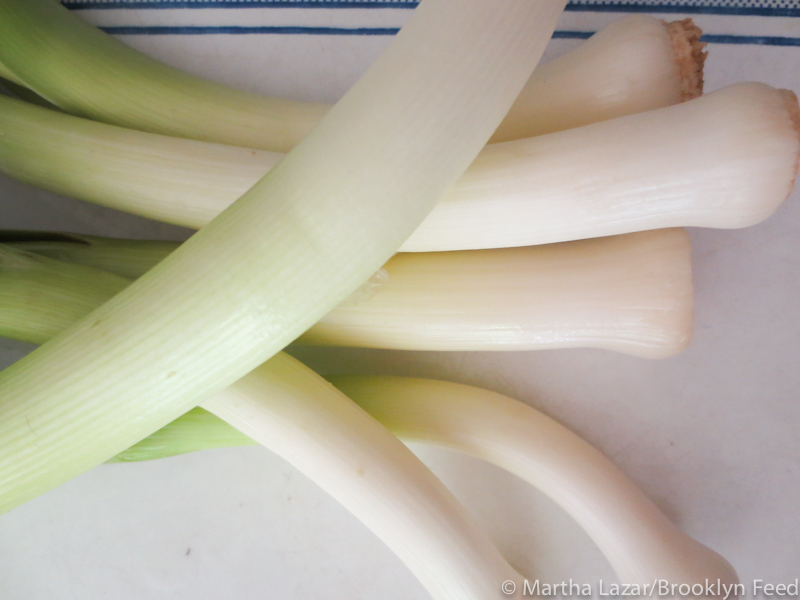
  • 2 leeks (white part)
  • appx. 9 T salt

After slicing all the veggies, you need to add salt and knead until the vegetables release the water from their cell walls. I add about 3 T of salt per large pasta bowl. I filled this bowl three times.

After you have done this, you should take handfuls of the veggies and press them firmly into the crock. I use my fist to tamp them down. Add all the water released and press the veggies under the water level. If you don’t have enough liquid, you can add 2 cups of water with 1 t. of salt dissolved in it. I save a few whole leaves of cabbage to place on top of all the chopped ones. This helps hold the loose pieces down.

Then put a plate, rock, ziploc filled with salt water, or the weight from the crock on top of the cabbage leaves to keep everything submerged. You let this sit out for a few weeks to ferment. Taste it periodically to test how fermented you like it. Too fermented gets mushy.

I made this batch about a week ago and the crock is sitting in a corner of my kitchen. I kept hearing little blerps and couldn’t figure out what the source of the noise was. It turns out it was bubbles emitting from the sauerkraut crock. Euw. As I mentioned in my previous sauerkraut post, you have to get over the fact that the food is basically rotting away. That is part of the process and it produces a delicious food that is extremely healthy.

Plum Cake

Is there anything better than summer fruit? Fresh tomatoes maybe? We have been enjoying our weekly CSA pick ups of fruit and veggies. It’s fun to be surprised each week at pick up and to cook seasonally. I think our heirloom tomato share will begin next week!!!

We went to dinner at friend’s this week and I made a plum cake. We improvised and put a peach in the center ring. It’s a simple cake and is equally delicious with coffee at breakfast. Here’s the recipe.

How to make stock

I make a simple stock that is a combination of chicken and veggies. You can make yours all vegetarians very easily. I don’t go out and buy the ingredients for my stock. I kind of just, uh, stockpile them. Hee  hee. What I do is whenever I cut the ends off of carrots, or pull the stems off of parsley, I put the trimmings into a ziploc bag in my freezer. Bones from chicken, woody asparagus ends, whatever I’m cooking with goes in the bag.

When the gallon-sized bag is full, I put everything in a stock pot and cover with a couple of inches of water. I simmer for about an hour, or until the aroma makes my feet lift off the floor and I float towards the kitchen.

I scoop the big pieces out and then pour the stock through a mesh strainer. Voila! It’s much better than those cartons of chicken stock. And it’s already made with everything I like to eat.

Sausage Making!

I’ve been trying to gear myself up to make my own sausage. I’m not sure why, but it’s been intimidating. Neil got me an attachment for my stand mixer and my friend Michael got me a book on charcuterie. I watched loads of Italian and Polish men stuffing sausage on YouTube. But still I was intimidated. I ran into a friend on his way to a “sausage party”. Wasn’t sure if this was a cooking demonstration or a lifestyle party. Turns out he took a sausage making class. We went to their house with pickles a friend of mine and I made (she made pickled eggs) and George showed us how to stuff sausages.

A couple of weeks ago a good friend of mine visited from Toronto. He’s a fabulous cook, so we thought it would be fun to make a nice meal together. We made pasta, which was great because I wanted to see the consistency of his pasta dough (I think I make my dough too wet). And we made sausage. It was a whole family affair. Neil grilled it on the bbq and we were talking about it weeks later. We followed the recipe for a basic sweet Italian sausage, but added fresh basil, ground coriander and a cube of porcini bouillon.


How to Make Sauerkraut

I learned how to make sauerkraut in a workshop given by Sandor Katz. You can see his book Wild Fermentation in my booklist on the right. What I learned is that it is probably one of the easiest things you could make. So go ahead and impress all of your friends by making some.

What you need:

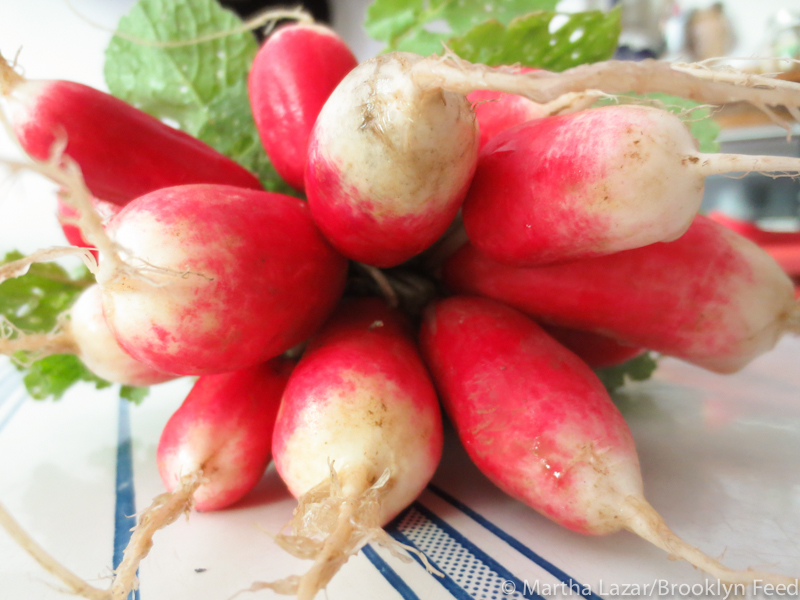
A variety of vegetables - You can go with just cabbage, but in the workshop Sandor used all kinds of fall veggies. I made a batch like that before and it came out delicious. In this batch I used a head of cabbage, a few giant carrots, a few radishes (the gorgeous finger-like ones above) a couple of turnips, an onion and  some bok choy. It’s a great way to use up fall veggies from the farmer’s market or your CSA.

Slice and chop up your veggies. I shred the cabbage and bok choy and cut everything else about 1/8″ thick. Place them in a large, non-reactive bowl and add a lot of salt. For this amount of veggies, I added 3T of salt. Then you knead the salt into the veggies to break down the cell walls and start drawing out the moisture. I’m not sure if you can tell from the photos, but the veggies are starting to get wetter as I go.

Once you have a fair amount of water, you want to put everything into a jar or crock to ferment. I use a big Ball jar. You have to really smush the veggies into the jar and press down on them very firmly. Add all of the liquid as well. I got a huge bowl of veggies to take up about 6 cups of space in this jar. As you push, the liquid rises above the level of the veggies. You want this to happen. Keep the veggies pushed down under the surface of the water. I don’t have a fancy sauerkraut pot (yet), so I put a glass on the top, which weighs the veggies down.

You don’t want to seal the jar, but you do want it covered. Wrap a cloth or paper towel around the top and secure with a rubber band. And then you let it sit for a week or so. Now you have to de-program your brain and let this sit out unrefrigerated. It will even emit bubbles, which made me surprisingly squeamish the first time I did this. The length of time it takes to ferment depends on how warm it is and also how strong you like your sauerkraut.  My batch is ready to bring up to my in-laws for the Thanksgiving weekend.


Making Fruit Vinegar

I am in the midst of making my first batch of fruit vinegar. If it works out, it will be ridiculously simple. You just take some ripe or even overripe fruit, add sugar water and wait. I’m going to see how it turns out before I post a recipe. My elderflower experiment wasn’t the success I had hoped it would be.


Rosh Hashanah

Last week we went up to my in-laws to celebrate the Jewish New Year. One of their big traditions is the making of kreplach, which is the Jewish version of a dumpling or wonton. It is filled with brisket and carmelized onions that are then ground together.

My father-in-law learned how to make them as a young boy by helping his bubbe (grandmother) and mother. His job was to crank the meat grinder. He has carried on the tradition, using his bubbe’s old rolling pin. They are extremely labor intensive, as you make and roll out the dough for each dumpling. And we’re not talking about making a dozen. He makes about 18 dozen at a go. He experimented with using wonton wrappers in the past to save some of the labor, but always preferred the real kreplach dough he and his bubbe made.

This year we decided to help him make them. I brought up my KitchenAid stand mixer, with the meat grinder and pasta roller attachments. I figured we could make the dough and then run it through the rollers to make it thin. If that worked, it could save a lot of labor. It turned out to work really well, and we set up an assembly line of sorts with each family member rolling, cutting, filling and folding the kreplach. We made about 19 dozen in exactly 3 hours. After they have been filled, you boil them for a few minutes and then lay them out to dry. When you are ready to eat them, you fry them in corn oil, or put them into soup. They are delicious and something to look forward to every year.

My father-in-law said that as kids, he and his brother used to fight to get the next kreplach out of the frying pan. And don’t you know that while we were making them, his brother called.

I can’t give you their family recipe, as it’s not mine to give, but here’s a link to a different one. They show very different fillings than what Neil’s family uses, but I’m sure they are delicious as well.