Jan 12 2010

Turn Down the Heat


A few weeks ago we went to Ikea and bought down comforters. We pay for our heat, which is somewhat unusual here in New York City. We like to keep our house cool, especially at night when we can hunker down under the covers. Our down comforter finally exploded a year ago, so we’ve been on the look out for an inexpensive replacement. At Ikea they rate their comforters on a scale of 6, with 6 being the warmest. Without hesitating, we grabbed a 6 for us and for Lindsay. At $49.99 the price was unbeatable.

I usually go to bed in the winter with ice blocks for feet and warm them up on my poor husband, who we refer to as the polar bear. After the first night of the #6 comforter I was insanely hot and so were Neil and Lindsay. We turned the heat OFF the next night. We were still hot (Lindsay had just gotten nice warm pjs for the holidays) so we went to bed in t-shirts and undies. It made trips to the bathroom in the middle of the night interesting in our no-heat house! I was still too hot. I was downright sweltering if Neil came anywhere near me. For the sake of marital harmony, we decided to get a #4 comforter and try to sell our #6s to friends with cabins or who wanted to hike the Andes. A queen size was $39.99, which was amazing! So far so good. We turn off our heat and we can still snuggle without overheating.

I was thinking about how much this little addition to our family has helped us save energy. I mean, who actually turns their heat off when it’s 20 degrees outside?

Looking around the internet I found some interesting facts that might help encourage you to turn down the heat. A warm comforter is a good first step!!

  • The rule of thumb is that you can save about 3% on your heating bill for every degree that you set back your thermostat” full time, says Bill Prindle, deputy director for the nonprofit American Council for an Energy-Efficient Economy.
  • Try turning down the thermostat 5 to 10 degrees at night, and then turn it up again in the morning when the coffee is brewing. If you can get used to that, you’ll save 5 to 10 percent of your heating bill.
  • It does NOT take more energy to re-heat your house after the heat has been turned down than to keep it at the same temperature all the time. Nor does turning your thermostat up make the house warm up faster — it simply makes the boiler stay on longer before turning off.

Things you can do

  • Close curtains or blinds at night to keep out the drafts.
  • Turn your thermostat down or off at night. You can get programmable ones that will turn the heat on in the morning, so you aren’t freezing when you wake up. Then turn the heat down when you go off to work.
  • Check the seals on windows. We have a huge window in our apartment that is too high to reach. It is single pane glass and the wood between the panes looks brittle. Neil once put plastic up (don’t ask me how he got up there without killing himself) and sealed it with a sheet of plastic. That lasted several years, but has since come down. We rent, so we are at the mercy of a landlord who isn’t interested in fixing the window. We can see things moving in the draft caused by this window.
  • Wear sweaters around the house instead of turning up the heat. Whenever I complained to my father that I was cold, his reply was always to put on a sweater. Makes sense.
  • Put plastic up over windows that leak. There are lots of different plastic coverings that are made especially for this purpose. You stick them around the window and then heat them up with a hairdryer. This causes the plastic to shrink a bit and pull tight. We do that with the window in our home office and it makes a huge difference.

Let me know your ideas for keeping the heat down.


Jan 5 2010

What to do with your old Christmas Tree

tree2

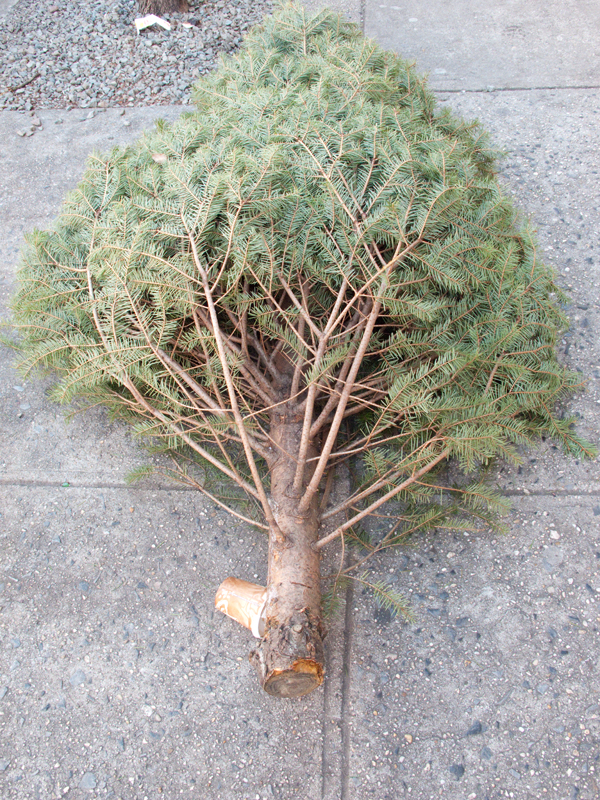
After my sister-in-law told us that her 3 year-old son wanted to sleep under his Christmas tree, my husband and I remembered our daughter’s love of our Christmas tree when she was about the same age. When our tree was dry and brittle, we started to break the news to Lindsay that we were going to take it down. She was really upset and kept hugging the tree, which of course just added to the already alarming loss of needles. Every year we take our tree to a local park, where they have a chipping program called Mulchfest. We brought our tree there, much to Lindsay’s skepticism to “be with it’s friends”. She bid it a tearful farewell and fortunately didn’t notice the crew feeding trees into the huge chipper.

tree

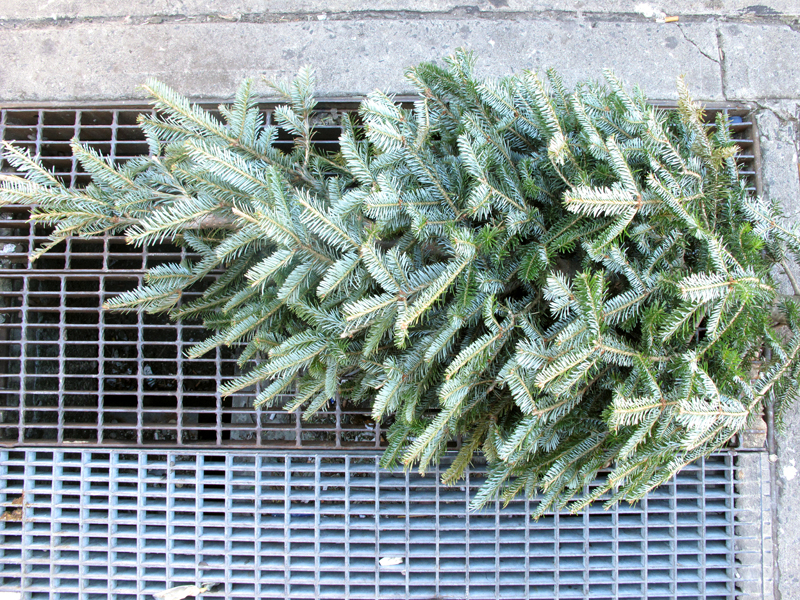
I always find it a little sad to see Christmas trees tossed out with the trash. The fact that they were once a treasured part of the holiday and are now tossed out on the street with the garbage bags always startles me. Plus it’s hard to wrap my head around all that organic matter going to a landfill with old batteries, diapers, etc. So, let’s try and come up with some great uses for old Christmas trees to prevent them from going into landfills. TREECYCLE!

  • Find out if your community has a tree collection or chipping program. Here in NYC we have mulchfest this coming Sat. 1/9 from 10am-2pm. You can look at this site to find a park in your area that will take your tree. And while you are dragging your tree down the street, why not stop and grab one or two others that are just lying on the sidewalk waiting for trash pick up? A lot of these programs allow you to bring some wood chips home with you for your garden.
  • If you don’t have a mulching/chipping program in your community, do it yourself. Prune branches off your tree and lay them down in your garden beds. Pine branches can look nice arranged around a tree on a city sidewalk. You can add them to your compost pile, although pine needles can take a while to break down.
  • You can prune branches and make small bundles. These are great to help start fires in your fireplace.
  • If you have the land, drag your tree out into a woodsy area to be used as a wildlife refuge for birds and small animals.
  • If you have a pond, weigh your tree down and put it in the water. It becomes a nice home for fish.
  • If you live near a beach, see if your community uses old Christmas trees in an effort to restore dunes like Bradley Beach in New Jersey.
  • You can save the needles and make potpourri or sachets.

If you have a great use for an old Christmas tree, please post!


Dec 22 2009

Hankies vs. Facial Tissues

hankie1

Last year in preparation for a very sad event, I bought a package of cloth hankies. Since then they have become a staple with me as my nose runs from October through May. I like how soft they are on my beleaguered nose, I like that I’m not cutting down trees to wipe my nose, and I like saying hankie way better than facial tissue. Seriously, what focus group came up with that name? It sounds as ridiculous as “ladies lounge”.

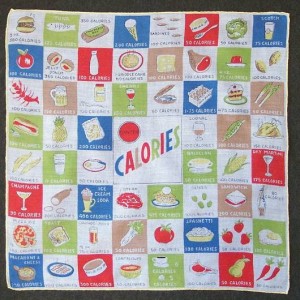
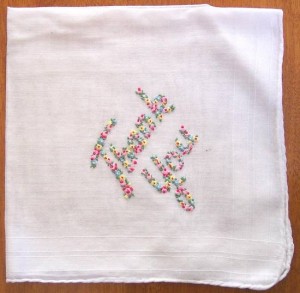
Here are some pictures of adorable vintage cloth hankies. They are easily found in almost any vintage clothing shop for very low prices. Why not try and save a few trees (actually 163,000 if every household used one less box of virgin fiber tissues) and smile when you blow your nose into a hankie that says “Thank you”? These hankies are from an online shop called Betsy Vintage. They are pricey, but so cute!

hankie2


Nov 24 2009

Hang It Out to Dry

Today’s tip is about saving some energy and energy dollars by hanging your clothes up to dry. Clothes dryers are one of the biggest energy suckers in the home. A typical dryer can use somewhere between 1800-5000 watts, which is about 2-3 times more than a dishwasher, or vacuum cleaner. You can figure out how much energy your home appliances are using here.

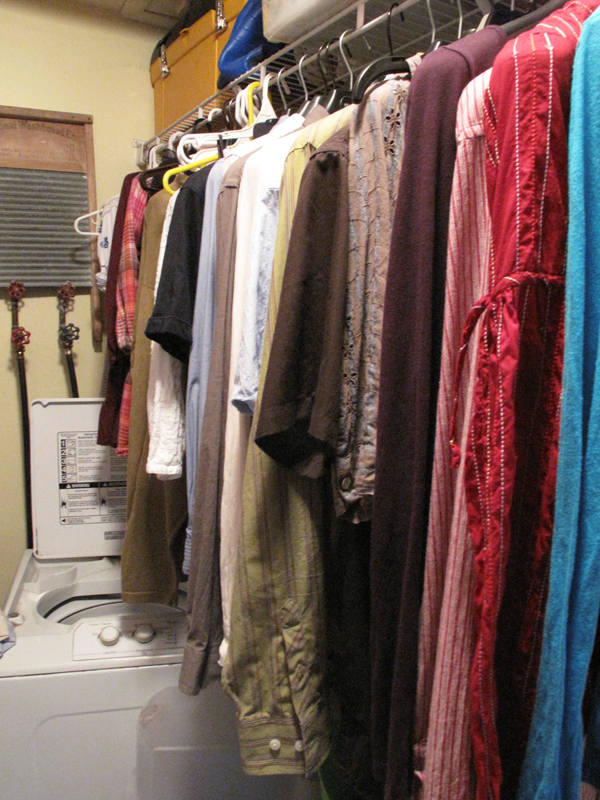
Laundry that has dried outside has a wonderful fresh smell you never get with the dryer. But it isn’t always practical or possible to hang your clothes outside. I have a very short clothes line outside, so I choose the heaviest items to hang out there. You know the towels or the mattress pads that tumble endlessly in the dryer? They dry in almost the same time outside and save a bundle of energy that way. Sometimes the towels can dry a little stiff, but you can toss them in the dryer for a couple of minutes to soften them up.

IMG_5541

If you don’t have outdoor space, you can get a bit creative in where to hang your laundry. Before buying a house, my sister used to have a line outside her apartment window. I often hang jeans up on our baby gates. In our laundry room (which used to be our darkroom when I first moved into this apartment) I hang a lot of shirts and other items up to dry. The fabric lasts a whole lot longer than if it was run through the hot dryer and it dries overnight without a care or practically a wrinkle. Some people hang lingerie to dry on their shower curtain rod.

Get creative! The less clothing that goes in the dryer, the less energy you will be using. Your clothes will last longer, so it’s a win-win situation.

Check out my sister’s insanely pretty clotheslines!


Nov 17 2009

Tuesday's Tip

river-rock

I’ve been thinking a lot about the small things we can do that add up to a big impact. That is what has made me want to post some ideas hopefully once a week. In any case, I’ve chosen tuesday as my day. The idea of these tips is to spark awareness and not guilt. I think we sometimes get caught up in how bad so many different things are that it’s hard to think of the small things we can do to chip away at the problem.

So, these are my guilt-free tips. If you have any ideas of your own *please* email them to me and I will post them when I can.

Today’s tip is to lower the water usage in your toilet. A family of 4 typically uses 100 gallons of water a day, and the toilet is the biggest factor in the water consumption.

Ideally we would all have low-flow toilets, or the cool dual-flush ones that have a different amount of water to flush #1 and #2. If that’s not an option (remember, don’t feel guilty!) you can reduce the amount of water in your tank. This reduces the amount of water used per flush, which adds up pretty quickly.

When I was a kid, a lot of people put a brick in their toilet tank. The mass of the brick would reduce a brick-size mass of water in your tank. That’s the idea I’m working with today. The only problem with using a brick is that it begins to deteriorate in the water, which can cause problems with your pipes.

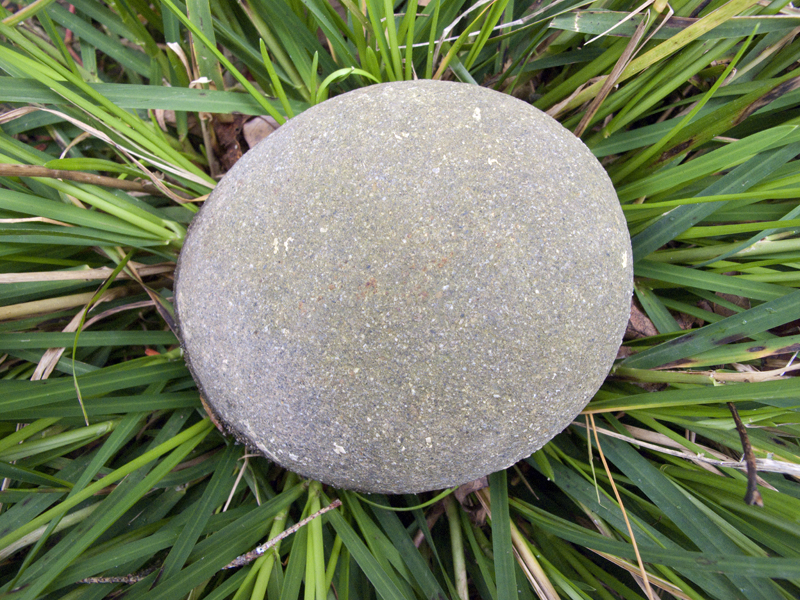
Instead of a brick, you can use a number of different objects. I love to go on hikes and nature walks, so my objective was to find a river rock. When we stayed with friends up in Woodstock, NY there were plenty of beautiful, smooth river rocks near their house. River rocks are great because their surface has been smoothed over by years of water flowing. They won’t deteriorate in your tank and cause problems.

If you can’t find a nice river rock, another solution is to take a plastic bottle or jug that is about 1 liter in size. Fill it with pebbles and seal it. The pebbles weigh it down, so it doesn’t float around and interfere with the workings of the toilet.

Of course, there’s the old saying, “If it’s yellow, let it mellow. If it’s brown, flush it down.” If you and your family are up for this (mine is not), you can save a lot of water by just not flushing as often.