Mulchfest 2013

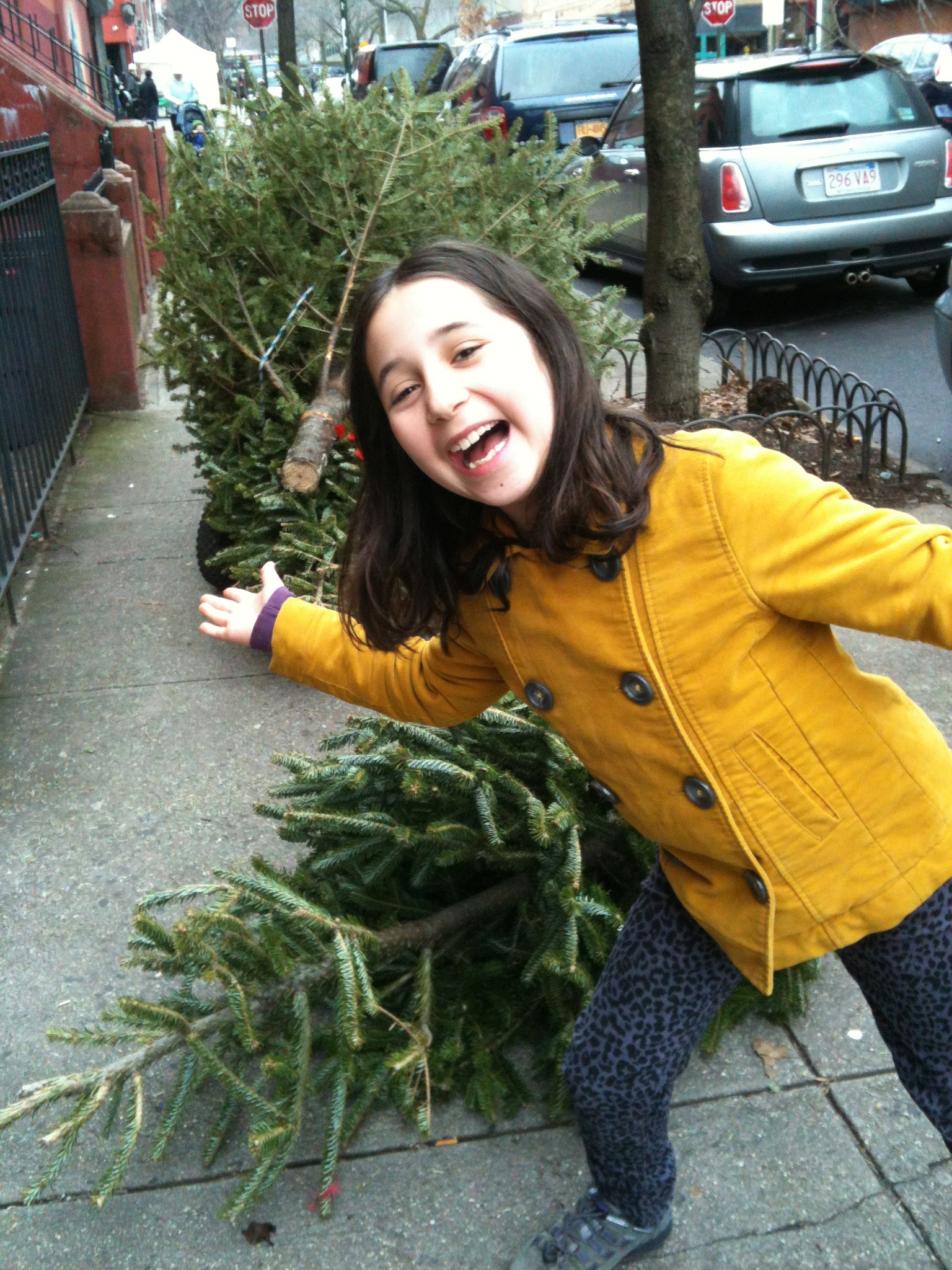
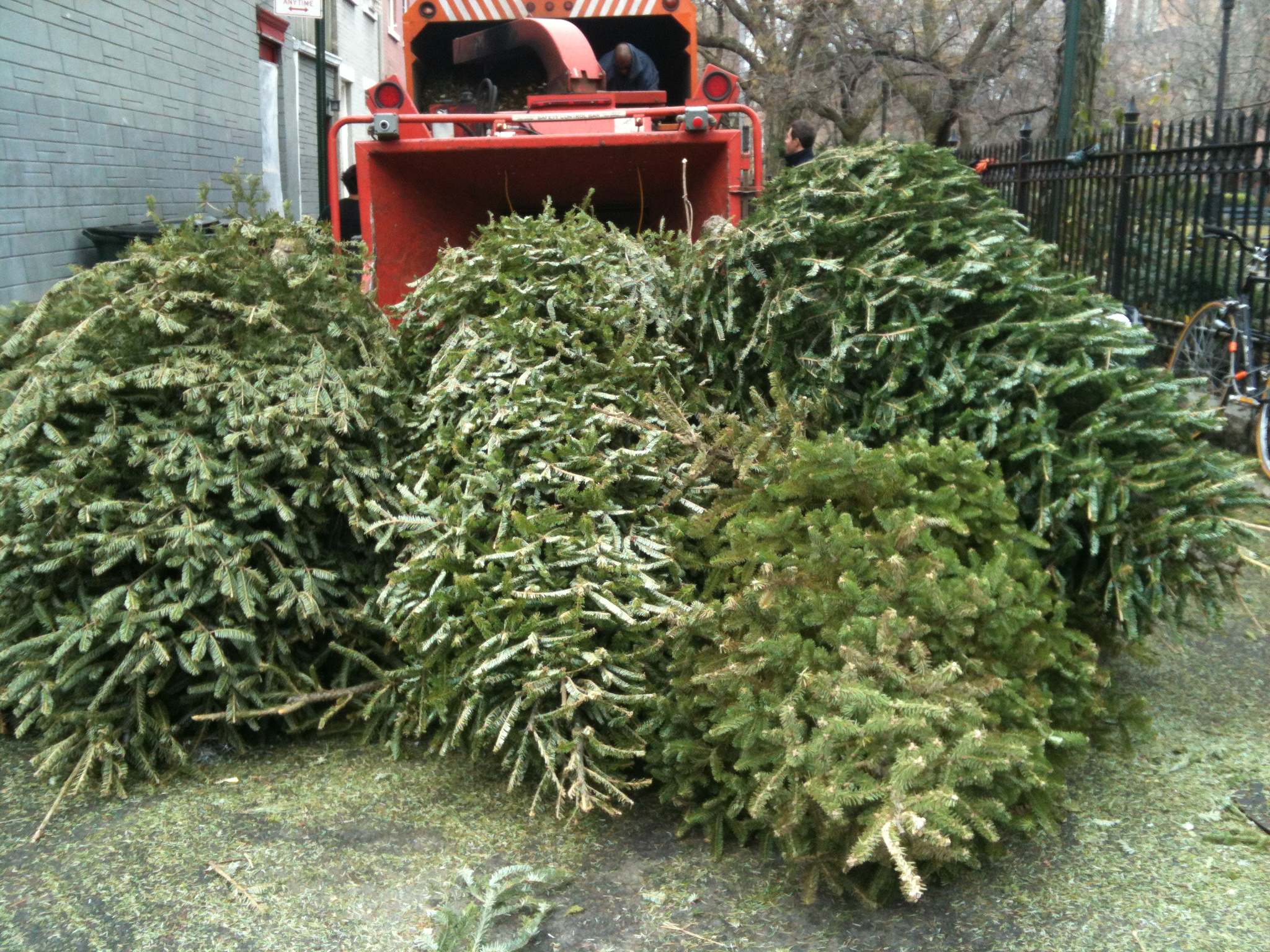
This weekend our parks department sponsored Mulchfest. Different parks in various neighborhoods across the city serve as drop off points for Christmas trees. They have a chipper on site and make short work of the trees.

We’ve done this for years. In fact, when Lindsay was small, she was so torn up over the loss of our Christmas tree, that we had to hide the fact that it was about to be shredded into a zillion pieces. She still didn’t want to stay for the chipping this year, but we didn’t have to watch her hug our tree with tears running down her face.

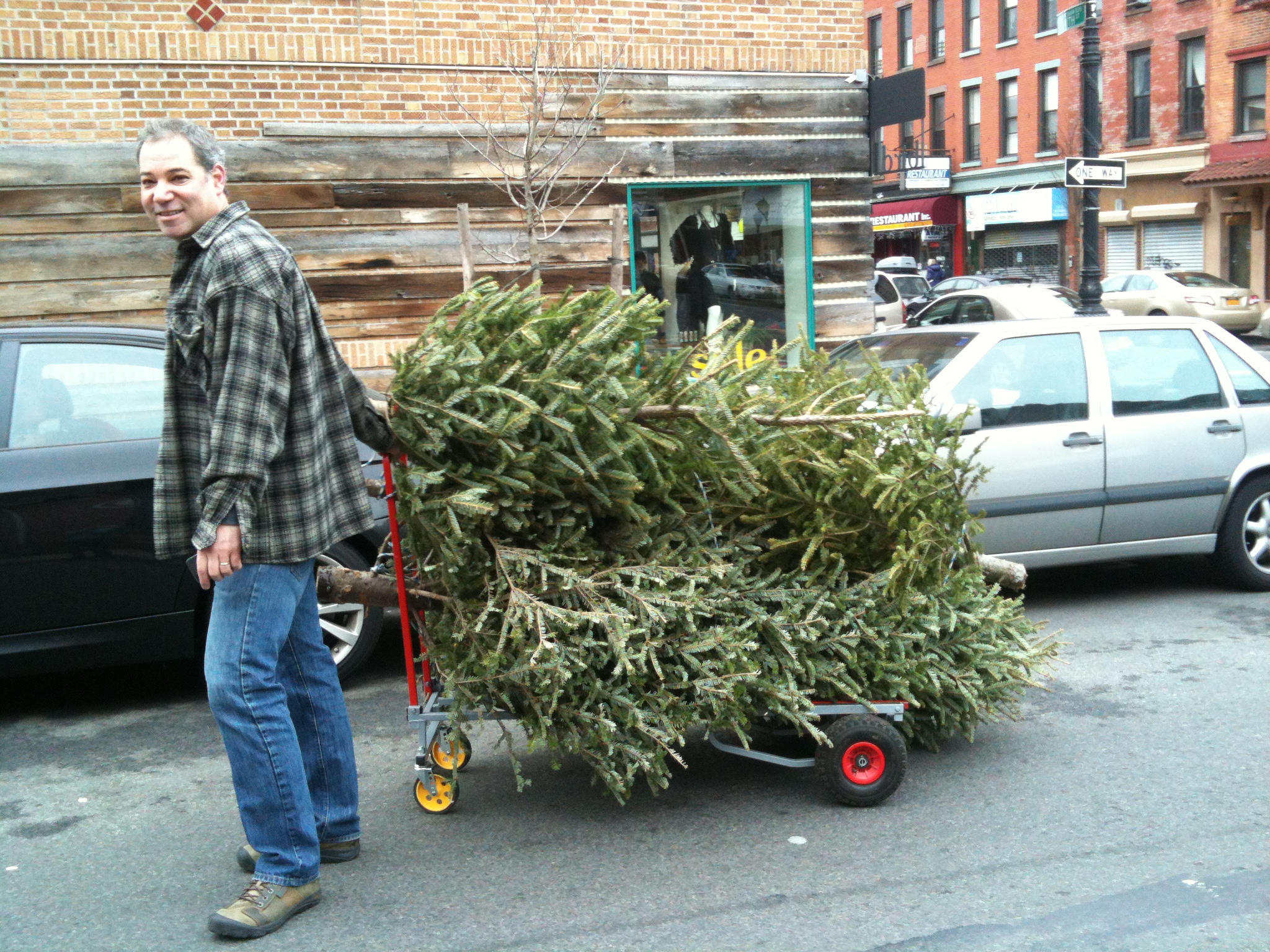
We try and pick up as many trees as our wonderful cart can carry. We were able to bring 3 additional trees to be mulched. I suggested making a second trip, but didn’t rally any interest with my family. Maybe next year…

The city makes mulch for their parks (or for pick up by the community), and there are fewer trees going to the landfill. I feel really good not to be one of the people who leaves their tree blowing around the street.

A Butterfly!

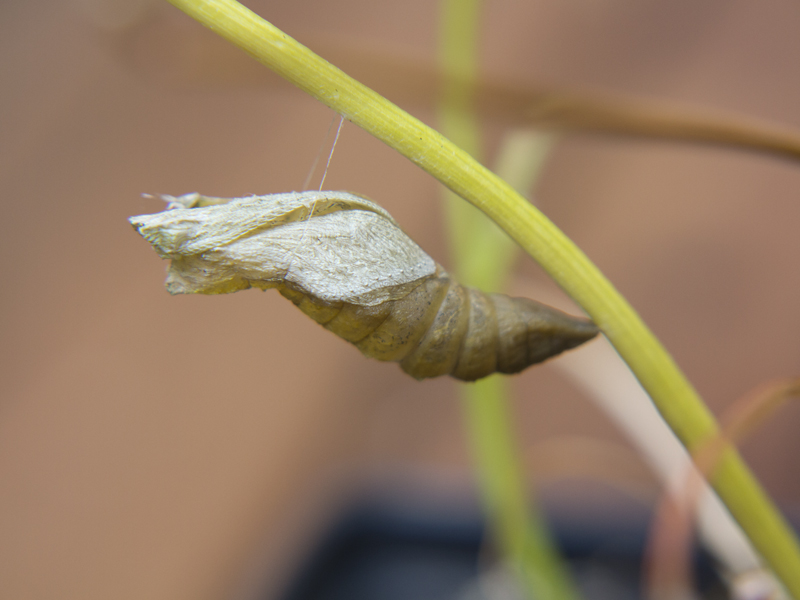
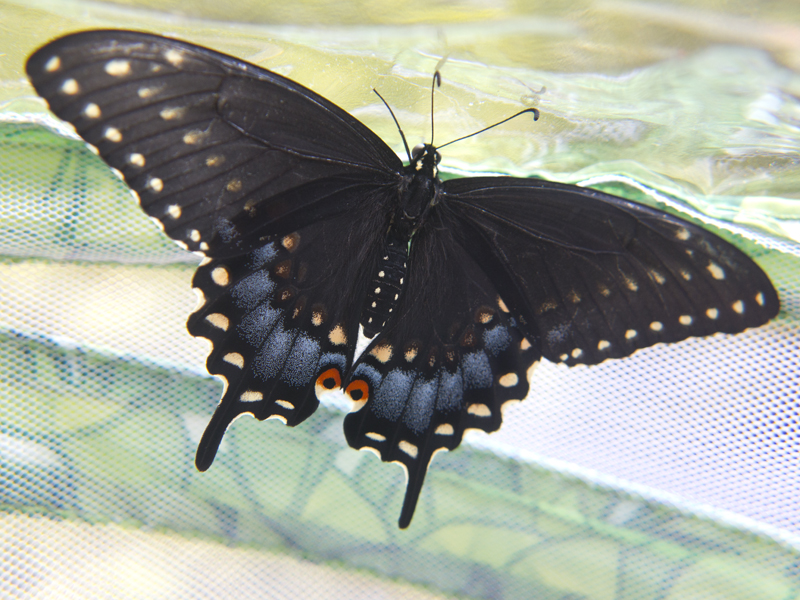
On Thursday morning, Neil looked into the butterfly habitat and noticed that our little chrysalis friend had opened up and a beautiful butterfly was flying around the inside of the netting. It must have emerged early in the morning because its wings were already pumped up and ready to fly. In case you haven’t read as much on raising caterpillars as I have (and really why would you?, here’s a good site. When a butterfly emerges their wings are soft and they spend some time “pumping” them up. Visions of butterfly gyms are coming to mind, aren’t they? Soon they harden and the butterfly is ready to fly off. This is quite clearly a very vulnerable time for the butterfly.

We seem to have a female, so hopefully she will lay lots of eggs and we will see her descendants in the years to come.

Transformation

This past weekend we went away to visit Neil’s parents. I picked some queen anne’s lace to bring back for our caterpillar to munch on. Lindsay and I looked and looked for it, but couldn’t find it. I was worried it had gone the way of it’s sibling, but then I spotted it.

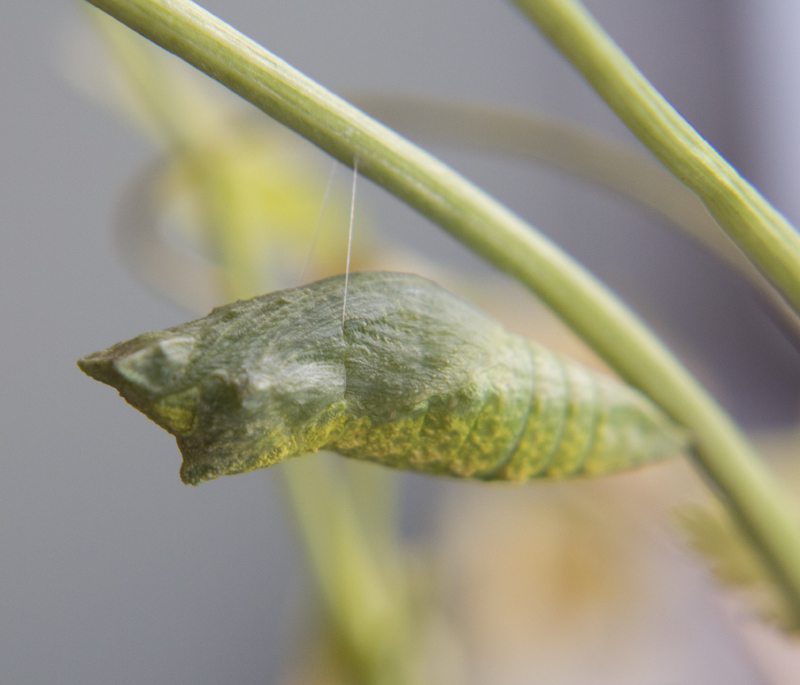
You can see the little bungee cord threads it spun to secure itself to the parsley plant. These caterpillars can make either a brown or a green chrysalis depending on what plant they choose to latch onto. I think the green is prettier than the brown.

I’m really looking forward to seeing this little critter hatch (or eclose). We’re going away in the middle of August, so fingers crossed it will do it sooner. Otherwise, I will need someone to pupae sit for us.

Eastern Black Swallowtail

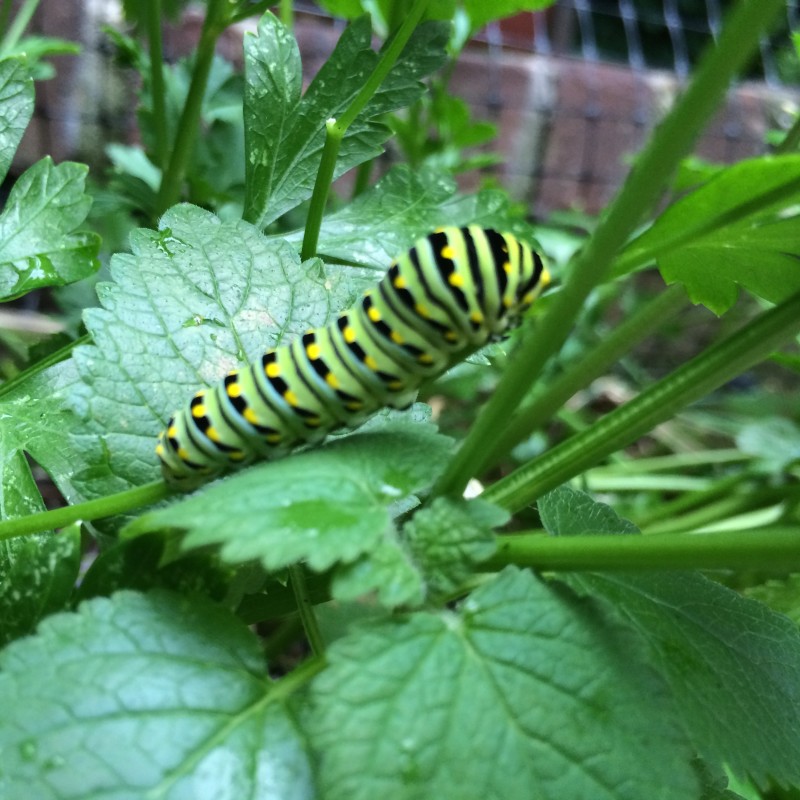
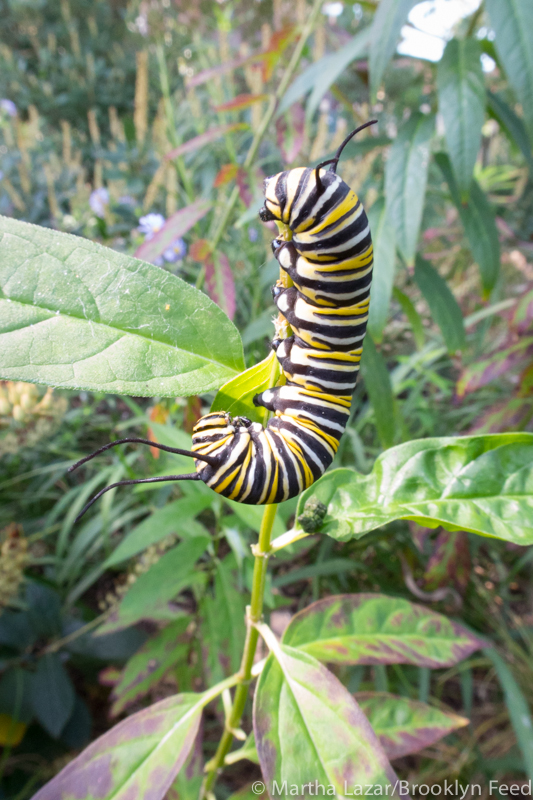
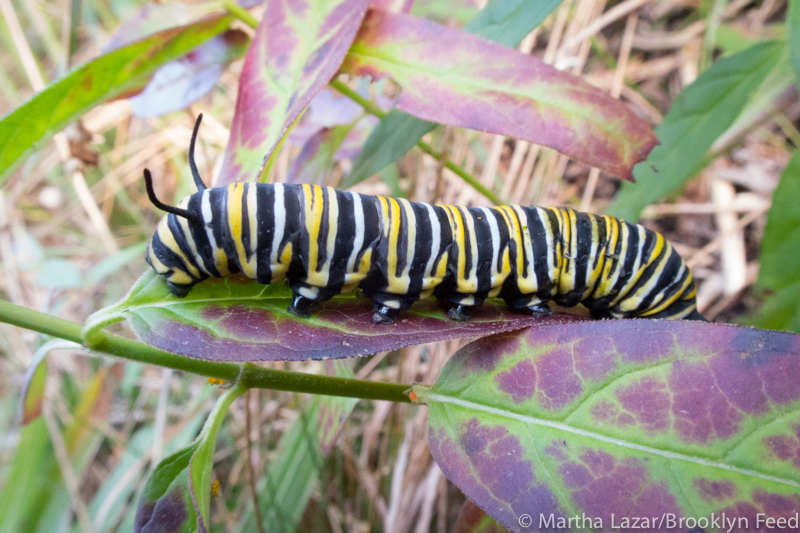
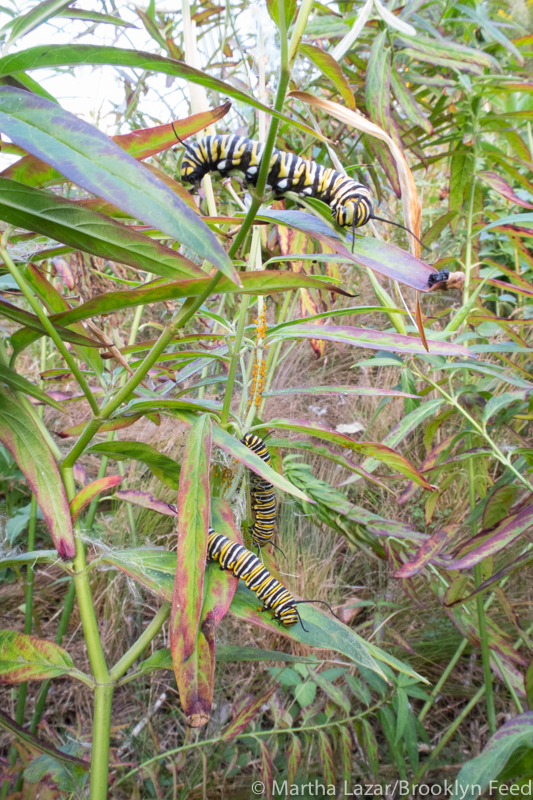
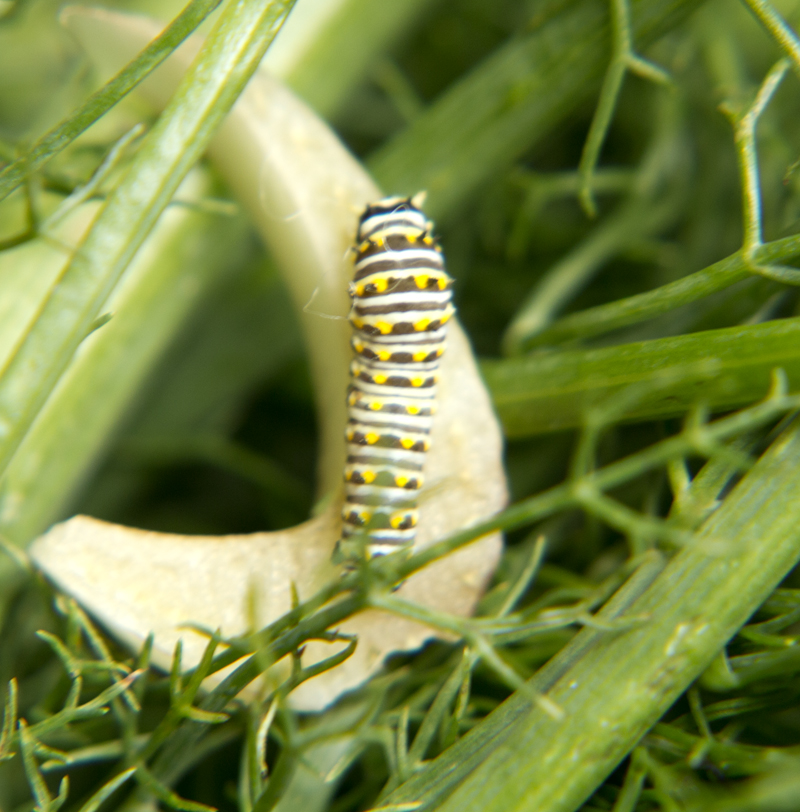
Last week we got fennel as part of our CSA share. I made a yummy shaved fennel salad with a lemon dressing and tossed the ferny tops into my chicken scrap tub. When I went to take the greens out to the chickens I noticed 2 interesting caterpillars munching away. Upon checking the internet (what caterpillars are on my fennel?) I found out that they were Eastern Black Swallowtail caterpillars. I found this site to be particularly helpful.

I thought it would be a fun project to raise our caterpillars indoors. Besides fennel, they like anything related to carrots, such as parsley and queen anne’s lace. I pulled a parsley plant out of my garden, stuck it in a pot and laid the fennel greens on top of it. I also borrowed a Butterfly Garden enclosure to contain the critters. They really move around when you aren’t looking. I had a funny moment when I was looking at my parsley plants outside and thinking about these beautiful, exotic caterpillars that would *never* live in Brooklyn. Well, there was one sitting right on top of my parsley plant. I decided to leave that one in the great outdoors and concentrate on the 2 I had. After a day, one had doubled in size and the other one died.

The one we have left, which we affectionately refer to as chubby, keeps doubling in size and eating up a storm. I added carrot tops to the enclosure and it seems to be thriving. Here’s a video of the little guy munching away on the parsley. I shot still frames and made a kind of time-lapse video. It only took about a minute for him to eat all those leaves!

I can’t wait to see it transform! My sister raised some Anise Swallowtails in her garden. You can read about them in her blog here.

Black Swallowtail Caterpillar from Martha Lazar on Vimeo.

Mama Pigeon

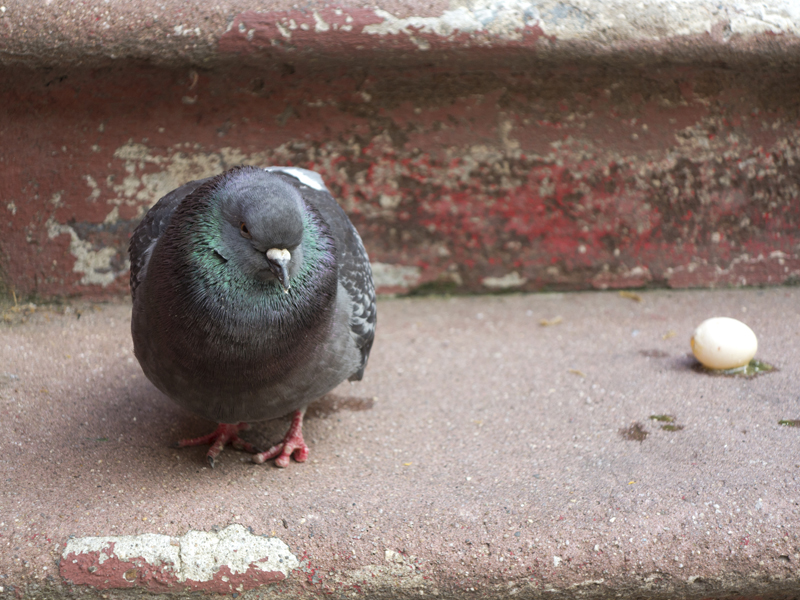
Have you ever seen a baby pigeon? That is a question that I’ve heard New Yorkers ask. There is even some urban folklore that they don’t exist. That’s actually not true, they just grow very large, very quickly.

But I ask you…have you ever seen a chicken sitting on a stoop with the egg it’s just layed right next to it?? I feel like this gal is the pregnant teen of the pigeon world. Although she was scared of the people walking by, she didn’t seem to want to abandon her egg. But she certainly didn’t know what to do with it. Maybe her parents kicked her out of the nest.

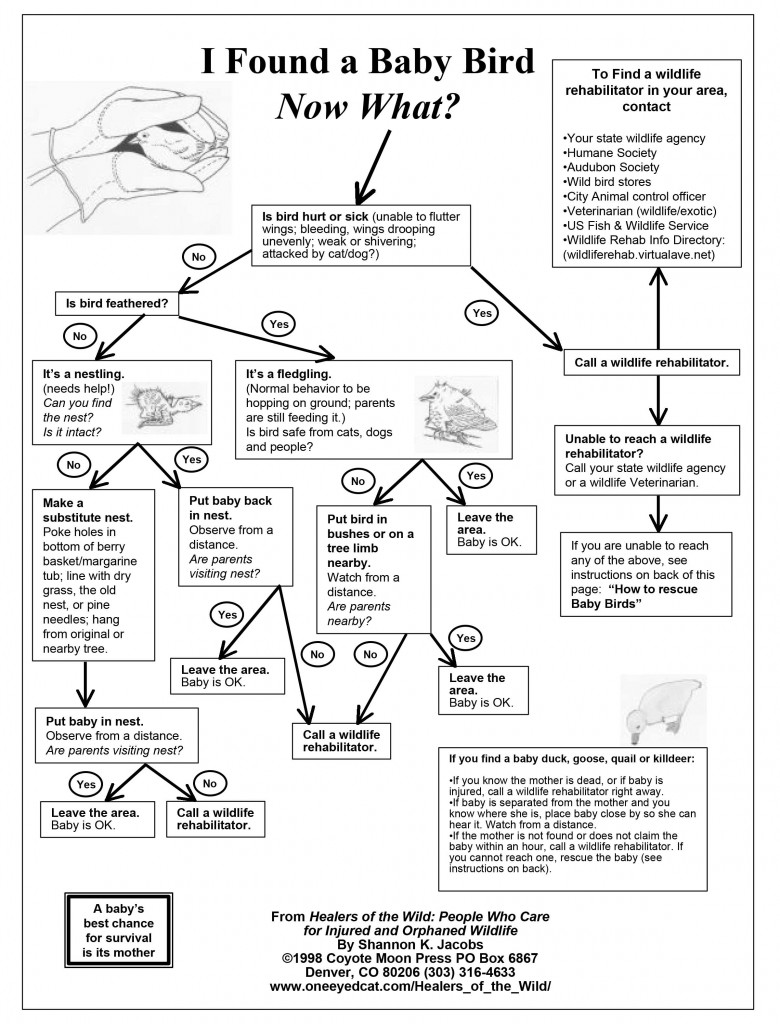
What does one do in this situation?

Martha vs. Mulberry season 20

This year we finally got smart. Over the last 8 years or so we have had a neighbor’s mulberry tree drop berries in our yard. I have very fond memories of climbing mulberry trees as a child and eating the sweet berries. That was never possible with this tree. The tree isn’t in our yard, so it’s not possible to climb the trunk. And the branches are so high that you cannot reach the fruit. So by the time the berries drop, they are already overripe and starting to ferment.

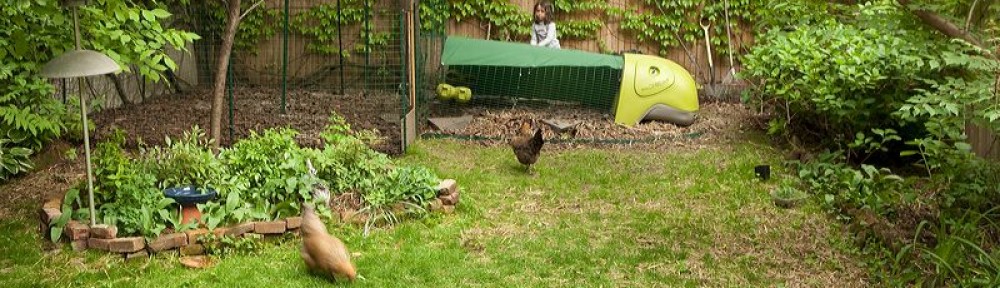
I am not a fan of people complaining about “messy” trees. The leaves, needles, pollen they produce are part of the package. This mulberry tree has gotten so large in the past couple of years that it shades and overhangs more than 1/3 of my garden. The chickens eat some of the berries, but really cannot make a dent. I lay out landscaping cloth during the 3 weeks of berry drop to catch the berries. You may have seen me waging war in recent years.

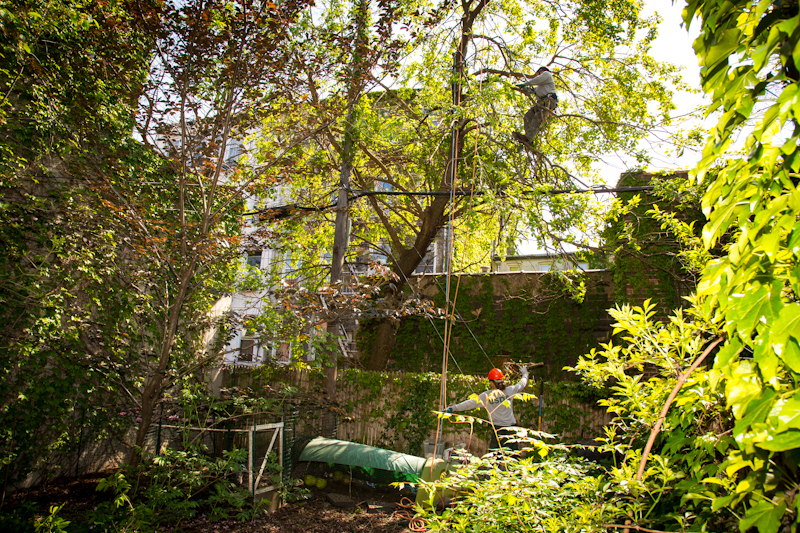
Anyhow, this year instead of complaining about it, we decided to do something about it. We hired an arborist to prune the branches that overhang our yard. Seems totally obvious, right? Well, when you are a renter, there is a weird mindset about paying for stuff like this. Anyhow, we are thrilled with the job they did. They had phone lines, a fence and our chicken coop as obstacles, but they didn’t hit any of them. It is money well spent to be able to avoid 3 weeks of rotting berries dropping on our backs when we are in the back of our garden.

Wild Bird Fund

New York City is the only city that doesn’t have a wildlife rehabilitation center. The good folks at Wild Bird Fund, Inc. are working to build one. Take a peek at this video to see some of the work they do in their make-shift quarters.

On their site, you can click to vote for them to get funding from a Pepsi grant, and to learn more about what they are doing.

Don’t Be Afraid of Nature!

I am getting so sick and tired of the weird comments from New Yorkers about anything related to the natural world. Nature is seen as a nuisance or an obstacle. I wonder what the alternative is. Paving over everything? Actually, it’s surprising how many gardens are neglected when outdoor, natural space is so limited. Okay, so I’m about to go off on a rant, but I will try to organize my thoughts by using some examples.

The Daily News just ran a story about urban chicken keepers. Nothing groundbreaking about the article. You can see it here. It was mostly about how chicken keepers have networked here to share experiences and knowledge. What was so weird was the comment section. Some people *hate* the idea of chickens in the city. Here’s an example of one of the comments:

i would not be happy if i had to wake up to a rooster every morn at crack of dawn. also would not be happy about all the Extra rats these chickens would attract w/ their feces,eggs and feed. WTF! go move to the farm and do this, how on earth is it ok to inconvenience your neighbors like this for a 20 cent egg?

Besides the fact that most people were opposed to roosters, which aren’t even allowed in the city, they seemed opposed to the idea of farming. You know those evil places where they till the soil and grow (here’s the scary part) VEGETABLES. You know. That we eat. Horrors!

There was just an article in the New York Times called Allergy-Free New York. In it the writer talks about the bad allergy season and how cities are planting very highly allergenic trees. Male trees don’t produce pesky fruit, so they are usually the ones planted. Trouble is they produce pollen. New York City is working hard to plant One Million Trees, which is absolutely wonderful. But all I’m hearing lately is everyone complaining about how the city trees are making their allergies horrible. The people talking about that article seemed to be saying that the trees are responsible for the allergies, which is true in part. What the article went on to say was that we only plant about 10 varieties of trees, which can also aggravate allergies. Having a large variety is better. But the underlying feeling I get is that people are having fantasies of these city trees and chain saws.

I keep hearing people complaining about messy trees. And by messy I just mean pollen and leaves. Not the 2 weeks of horror dropped down on our yard by the giant mulberry tree behind our yard. I’ve gotten requests to chop down an “old” maple tree in the yard of my childhood home. 40 years in the life of a maple makes it about a teenager, sheesh.

Our neighbors are taking down all the ivy that covers the side of their building (that faces my garden). We’re sad to see it go because it is much prettier than looking at a building. But I was informed by one of the workers that the ivy harbored millipedes. “And you don’t want those around, especially if you have kids!” Huh?

People here complain if it’s cold, hot, rainy, too many mosquitoes, humid, there are ants, etc. What are they all saying?? NATURE = BAD!

Sunday in the park with Ruth

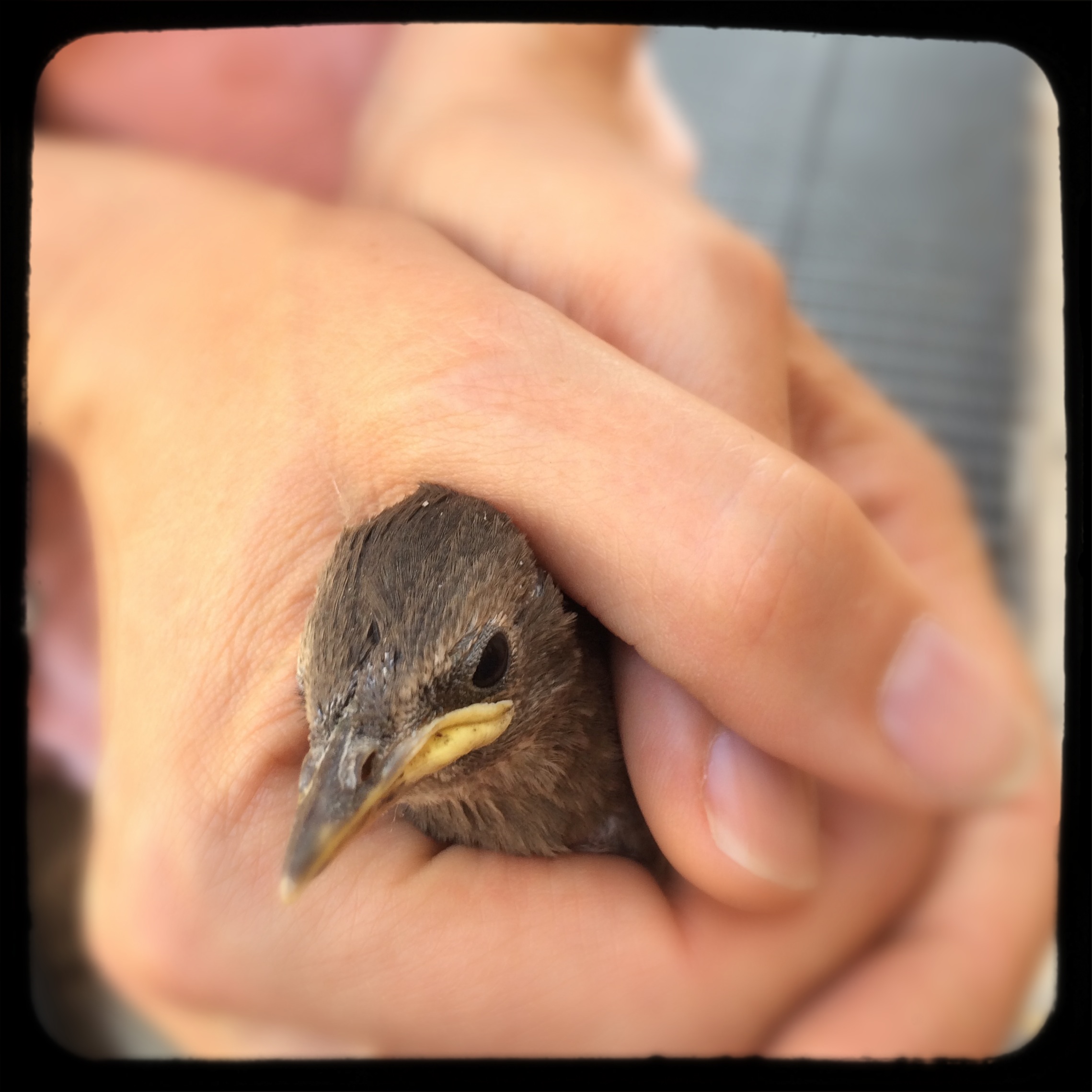
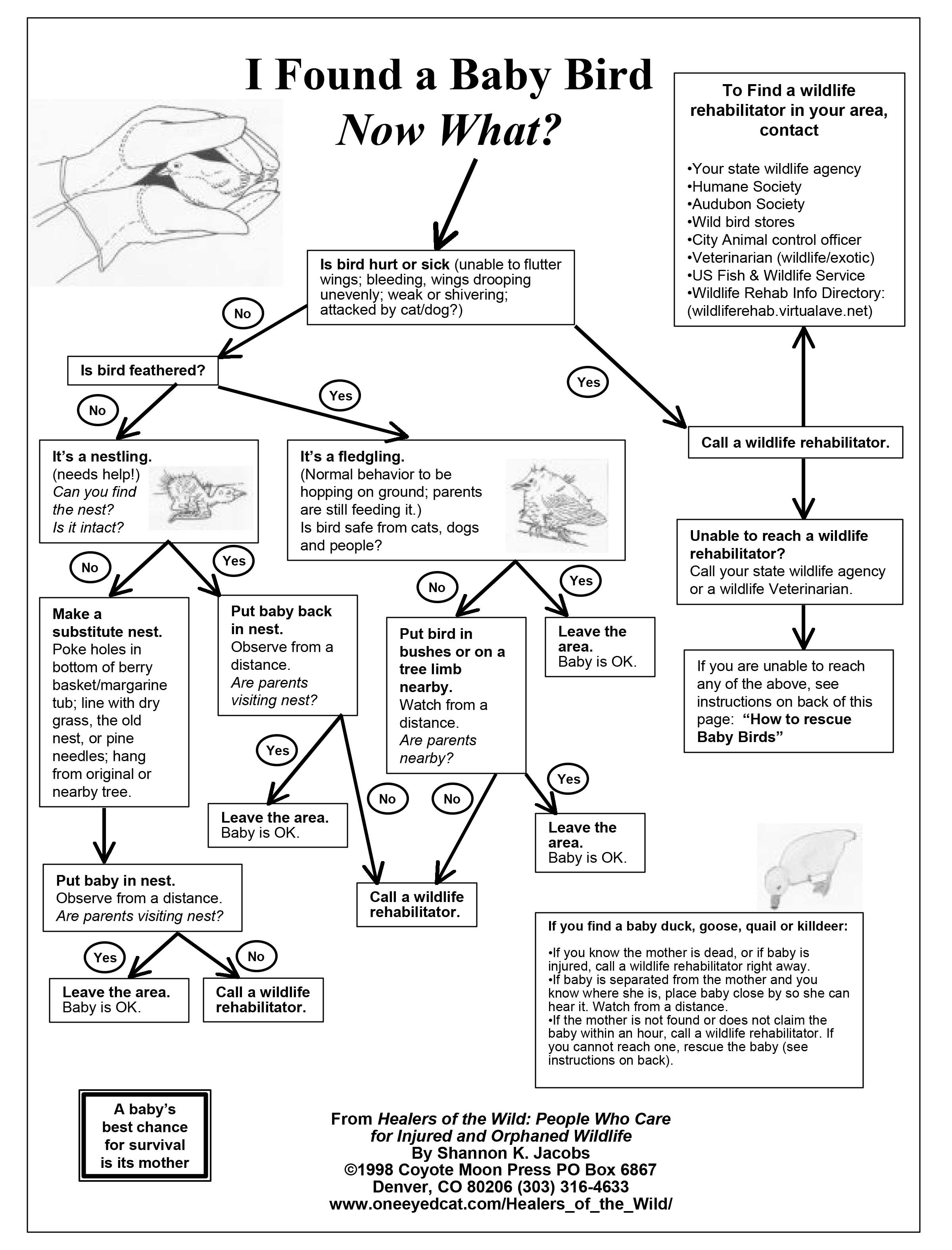
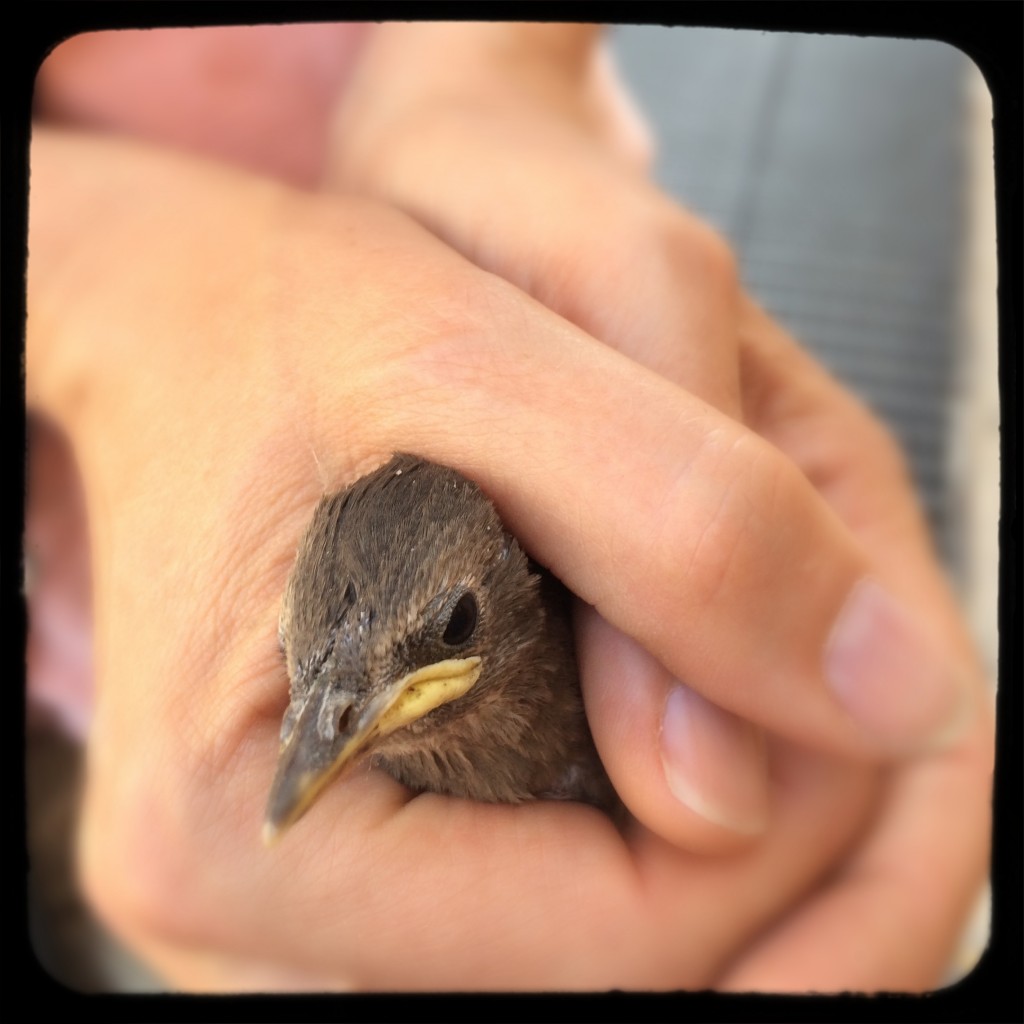
Although it was raining on and off today, my friend Ruth and I decided to take a walk through Central Park. We spent most of our time on the Northern end, which has fewer people and feels a bit wilder. There were signs of spring, such as snowdrops and robins and almost blooming daffodils. We saw quite a few different birds: pairs of bufflehead ducks, swans, a robin, bluejay, common grackles, downy woodpecker, canada geese, mallard ducks, starlings and 2 domestic white ducks. What?? I have an Audubon bird guide application for my iphone, so I was sure they weren’t wild ducks. I came home and searched online and found out that it is pretty common for people to get pet ducks (bunnies, turtles, etc.) and then abandon them in a local park. I thought the woman feeding the mallards bread was bad enough. Come on people! It should be a big decision as to whether or not you get a pet. And then once the decision is made, it is a big commitment to that animal. Domestic ducks don’t have flight feathers like wild ducks and cannot survive in the wild. Even the wild of NYC. The international bird rescue research center has a great site which goes into further detail. Now that I’m on my soap box, let me also mention that should you find some “abandoned” baby animals/birds this spring, please continue walking. The parents that you think have abandoned their babies are too terrified to come back while you are standing there.

When I returned home I let the hens out to peck around my back yard. I noticed that the few garlic cloves I planted in the fall are starting to sprout up. I eagerly looked for signs of my asparagus sprouting and when I went to that bed, the hens eagerly followed me. As I was pawing through the layer of leaves and mulch, the girls decided to do the same. Much to our mutual satisfaction, they found and ate about a dozen baby slugs. It was pretty gross to watch, but very gratifying. My future basil and I thank them.

Crow Planet by Lyanda Lynn Haupt


This weekend promises to be a dreary, rainy weekend here. The perfect weekend to curl up on the sofa with a book and a pot of tea. Should this sound inviting, I will go so far as to recommend a book to read. Crow Planet by Lyanda Lynn Haupt.

Lyanda lives in Seattle with her husband and young daughter. Her vast knowledge of birds stems from working at Seattle Audubon, the Fish and Wildlife Service (researching seabirds) and working in raptor rehabilitation (She identified the hawk in my backyard as an juvenile Coopers hawk). Somehow Lyanda (or maybe her husband) found my blog and asked if I would like a review copy of her book.

Have you ever had a friend invite you to hear his/her band, or go see their art exhibition? I felt the same way while waiting for Lyanda’s book to arrive. Nervous and thinking, “God I hope it’s good, because what will I say if it stinks?” I was pleasantly surprised when I opened the package and saw the beautiful cover art by Daniel Cautrell. A mix of the lovely and the slightly creepy that totally appeals to my aesthetic. I also thoroughly enjoyed the book. Lyanda takes her reader on her journey to study urban wildlife (the crow in particular) as her way to connect to “every day” nature. The mix of her personal explorations, scientific research and folklore meld beautifully together.

Along the way I learned a lot about crows. I won’t spoil the book, but I will share one piece of learned crow wisdom…Don’t piss a crow off. They recognize individual faces and hold a grudge!

Anyway, I recommend the book. It’s a really thought provoking read. I also recommend visiting Lyanda’s blog The Tangled Nest. I am ready to share my copy with a reader (in the US). Please write your favorite urban/suburban wildlife encounter in my comments section and I will randomly choose someone on Wed. 3/17 to receive the book. Right now my favorite encounter was the hawk munching on the pigeon in my backyard. One less pigeon in the world!!

If you want to read a much more in-depth review of Crow Planet, please click here to see the LA Times review.

Have a great weekend, drink some tea and stay dry!