May 6 2010

Earth Day recap

Between being sick and working on a casting for a National Aids Fund video project, I have hardly had time to post.

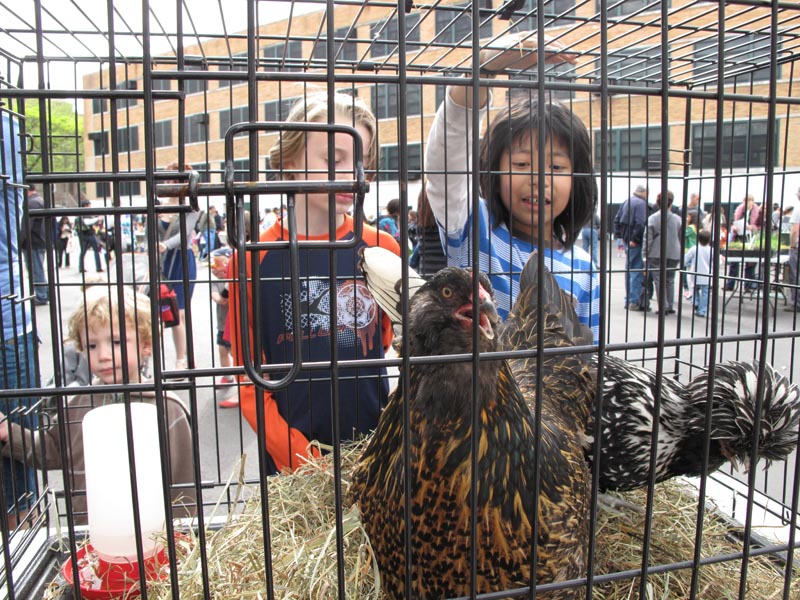
Earth Day at Lindsay’s school went really well. I left Edie home because she was acting very sick that day. (Fortunately having a day to herself without her sisters seemed to do the trick and she’s all better) There were all kinds of interesting people and kid’s projects there. The Brooklyn Botanic Gardens was there talking about vermicomposting, someone was talking about green roofs, there were earth boxes and the kids were able to make sculptures out of egg cartons and water bottles.

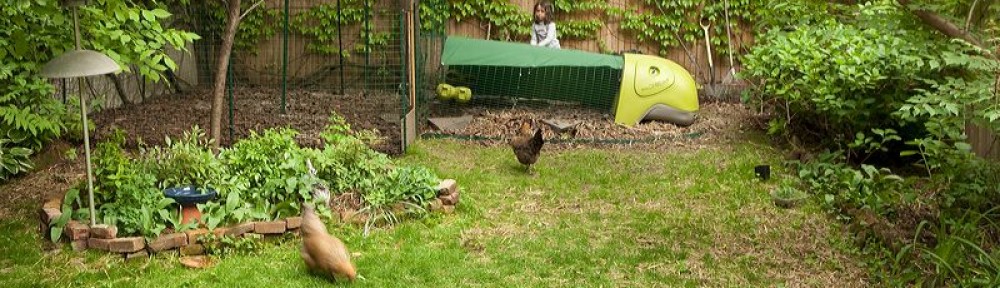
The hens were a big hit. I brought photos of my garden to “prove” to people that we have incorporated the chickens into our lifestyle rather than the other way around. I also brought a bag of ivy leaves that the kids could feed to the hens. That was a big hit. I love this photo because it looks as though Lulu is trying desperately to communicate to me that she wants to go home.

It was threatening to rain all day and at one point a dark cloud passed overhead and it started to sprinkle. And true to form (see my rant about new yorkers vs. nature here), someone claimed they saw lightning (there wasn’t any) and a general panic set in while all the kids were herded inside. Nothing like everyone running away from the first sign of a natural occurrence as a way to celebrate Earth Day. Sigh. But I think besides that utter silliness, it was a great event.


Apr 21 2010

Don’t Be Afraid of Nature!

I am getting so sick and tired of the weird comments from New Yorkers about anything related to the natural world. Nature is seen as a nuisance or an obstacle. I wonder what the alternative is. Paving over everything? Actually, it’s surprising how many gardens are neglected when outdoor, natural space is so limited. Okay, so I’m about to go off on a rant, but I will try to organize my thoughts by using some examples.

The Daily News just ran a story about urban chicken keepers. Nothing groundbreaking about the article. You can see it here. It was mostly about how chicken keepers have networked here to share experiences and knowledge. What was so weird was the comment section. Some people *hate* the idea of chickens in the city. Here’s an example of one of the comments:

i would not be happy if i had to wake up to a rooster every morn at crack of dawn. also would not be happy about all the Extra rats these chickens would attract w/ their feces,eggs and feed. WTF! go move to the farm and do this, how on earth is it ok to inconvenience your neighbors like this for a 20 cent egg?

Besides the fact that most people were opposed to roosters, which aren’t even allowed in the city, they seemed opposed to the idea of farming. You know those evil places where they till the soil and grow (here’s the scary part) VEGETABLES. You know. That we eat. Horrors!

There was just an article in the New York Times called Allergy-Free New York. In it the writer talks about the bad allergy season and how cities are planting very highly allergenic trees. Male trees don’t produce pesky fruit, so they are usually the ones planted. Trouble is they produce pollen. New York City is working hard to plant One Million Trees, which is absolutely wonderful. But all I’m hearing lately is everyone complaining about how the city trees are making their allergies horrible. The people talking about that article seemed to be saying that the trees are responsible for the allergies, which is true in part. What the article went on to say was that we only plant about 10 varieties of trees, which can also aggravate allergies. Having a large variety is better. But the underlying feeling I get is that people are having fantasies of these city trees and chain saws.

I keep hearing people complaining about messy trees. And by messy I just mean pollen and leaves. Not the 2 weeks of horror dropped down on our yard by the giant mulberry tree behind our yard. I’ve gotten requests to chop down an “old” maple tree in the yard of my childhood home. 40 years in the life of a maple makes it about a teenager, sheesh.

Our neighbors are taking down all the ivy that covers the side of their building (that faces my garden). We’re sad to see it go because it is much prettier than looking at a building. But I was informed by one of the workers that the ivy harbored millipedes. “And you don’t want those around, especially if you have kids!” Huh?

People here complain if it’s cold, hot, rainy, too many mosquitoes, humid, there are ants, etc. What are they all saying?? NATURE = BAD!
Mar 13 2010

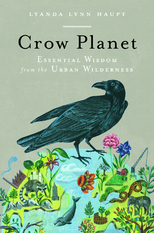
Crow Planet by Lyanda Lynn Haupt


This weekend promises to be a dreary, rainy weekend here. The perfect weekend to curl up on the sofa with a book and a pot of tea. Should this sound inviting, I will go so far as to recommend a book to read. Crow Planet by Lyanda Lynn Haupt.

Lyanda lives in Seattle with her husband and young daughter. Her vast knowledge of birds stems from working at Seattle Audubon, the Fish and Wildlife Service (researching seabirds) and working in raptor rehabilitation (She identified the hawk in my backyard as an juvenile Coopers hawk). Somehow Lyanda (or maybe her husband) found my blog and asked if I would like a review copy of her book.

Have you ever had a friend invite you to hear his/her band, or go see their art exhibition? I felt the same way while waiting for Lyanda’s book to arrive. Nervous and thinking, “God I hope it’s good, because what will I say if it stinks?” I was pleasantly surprised when I opened the package and saw the beautiful cover art by Daniel Cautrell. A mix of the lovely and the slightly creepy that totally appeals to my aesthetic. I also thoroughly enjoyed the book. Lyanda takes her reader on her journey to study urban wildlife (the crow in particular) as her way to connect to “every day” nature. The mix of her personal explorations, scientific research and folklore meld beautifully together.

Along the way I learned a lot about crows. I won’t spoil the book, but I will share one piece of learned crow wisdom…Don’t piss a crow off. They recognize individual faces and hold a grudge!

Anyway, I recommend the book. It’s a really thought provoking read. I also recommend visiting Lyanda’s blog The Tangled Nest. I am ready to share my copy with a reader (in the US). Please write your favorite urban/suburban wildlife encounter in my comments section and I will randomly choose someone on Wed. 3/17 to receive the book. Right now my favorite encounter was the hawk munching on the pigeon in my backyard. One less pigeon in the world!!

If you want to read a much more in-depth review of Crow Planet, please click here to see the LA Times review.

Have a great weekend, drink some tea and stay dry!


Mar 4 2010

Brooklyn Hawk

Over the weekend, Neil looked out our kitchen window and spotted this beautiful hawk. It has visited our backyard before and it is always very special to see such a glorious bird here in the city. It generally sits in this tree, which grows above our chicken coop. Fortunately this time the hawk was too engrossed with the pigeon it was eating to notice the chickens. Conversely, the chickens were still in their covered run, so they didn’t see the predator sitting right over them. You can see what’s left of the pigeon on the branch the hawk is sitting on.

We have friends who live right around the corner from us who have seen and named this hawk (Hank). They have a view of our yard from their apartment, so I called them and helped them to spot the hawk. We live along a street that became a restaurant row about 10 years ago. It’s been interesting to see how the abundance of food has affected the natural world in our neighborhood. We first started noticing rodents. Sigh. Then we got raccoons. And now we have hawks feasting on the vermin that’s been attracted to the area. I was very happy to see the hawk eating a pigeon. Hopefully our friend decides to hang around.


Feb 8 2010

Saratoga Tree Nursery – School Seedling Program

white pine

If you live in New York State, you might be interested in the School Seedling Program offered by the Department of Environmental Conservation. All schools and school-sponsored organizations are eligible to receive 50 tree seedlings (for which you will need 1,800 square feet of space). If you have less space, you can get their Urban Wildlife Packet, which contains 30 seedlings for shrubs that are favorites of songbirds. You only need 900 square feet of space for the shrubs.

The seedlings must be used as part of an educational program and not just landscaping for the school. The deadline is March 31st. You can get the application and more information here.

Helping the environment for free? How could this get better?


Sep 24 2009

Urban Bee Gardens

bee

I just stumbled upon a nice site that gives information about planting gardens to specifically attract bees (native bees as well as honey bees) and offer them a habitat in which they can live. It is fairly specific to California, but a lot of the plants (with an emphasis on natives) grow well in other parts of the country.

The site is called Urban Bee Gardens and is out of Berkeley. And the photo has absolutely nothing to do with their site, but everything to do with my warped sense of humor.


May 28 2009

Care for your urban tree

A lot of trees have been planted in my neighborhood lately. It is a part of MillionTreesNYC, which is an initiative with NYC Parks and New York Restoration Project. They aim to plant 220,00 street trees, 380,000 trees in parks and 400,000 will come from private organizations and homeowners.
street-tree

We have a little tree outside our apartment building and I was inspired by seeing all of these new trees to take better care of it. I started by dumping several buckets of worm-filled compost in the pit around the tree. When I watered it, the water just ran off the compacted soil. So I figured I needed a better idea of how to care for my urban street tree. I found some great information on the NY Parks and Rec site as well as the Brooklyn Botanical Garden’s Greenbridge site. Below is a summary of what I learned.

1) Loosen up the soil- With a hand cultivator (the hand tool that looks like a 3-pronged claw, loosen up the top 2-3″ of soil. Most city tree soil gets compacted, which prevents water and air from reaching the roots. Dig up any weeds that will compete with the tree for nutrients.

2) Flush the soil- In the spring, water the tree well to remove road/sidewalk salt that might have accumulated. Also try and keep animals out as much as possible. Dog urine can throw off the soil nutrients and burn the tree trunk. 

3) Amend the soil- Add a 2-3″ layer of mulch around (but not touching) the tree. The mulch is great at preventing weeds, keeping the soil below it moist and slowly breaking down into nutrient-rich compost. The mulch looks nice and lets neighbors know that you are taking care of your tree. In other words, it might deter people from tossing their trash in your tree pit.

4) Water your tree- The area around a tree that allows water in is quite small for the amount of water a tree needs to flourish. Water newly planted trees about 10-15 gallons a week. Mature trees need about 8-10 gallons a week during periods when it hasn’t rained. 

5) Plant flowers- You need to be careful not to harm the tree when you plant around it. Digging in the pit can damage roots. Raising the soil level against the tree’s trunk can cause it to rot or prevent air from reaching the roots. However, you can plant flowers or plants with shallow roots that won’t disturb the tree. Brooklyn GreenBridge recommends: small annuals like impatiens, or perennial groundcovers like bugleweed (Ajuga reptans) or periwinkle (Vinca minor)—avoid ivy. Small bulbs are good too: try crocus, miniature daffodils, or glory-of-the-snow (Chionodoxa species). 

An urban tree has a lot stacked up against its survival – air pollution, car doors, dog pee, bicycles chained up to them as well as limited space for them to grow and get their water. Any help we can give them will help them to thrive.